— By Mohammed Imran @Pan Thar
Cox’s Bazar, Bangladesh
CSD – For the Rohingya, justice is more than winning a court case. It is about whether we will get back the rights we lost, whether we can go home with dignity, and whether our children will grow up with the freedom that earlier generations were denied.
For decades, the Rohingya faced discrimination, restrictions, and violence in Myanmar. In 2017, the violence forced hundreds of thousands of us to flee to Bangladesh. Many have spent years in refugee camps since then, unsure about the future.
In November 2019, The Gambia took Myanmar to the International Court of Justice (ICJ), saying Myanmar broke the 1948 Genocide Convention. In January 2020, the Court ordered Myanmar to prevent acts of genocide and protect evidence. In 2022, it rejected Myanmar’s objections and let the case go ahead. Hearings on the main issues took place in January 2026. The ICJ will now deliver its final judgment on 19 November 2026, and it cannot be appealed.
But what does justice mean to the people who have waited for it? To find out, I listened to four Rohingya voices from different generations.
Justice Connects Generations
Mohammed Faisal, a Rohingya human rights defender, says justice means getting back the rights, dignity, freedom, and identity taken from our community. He explains that each generation wants something different.
Our grandparents want the world to recognise what happened and hold those responsible to account. Our parents want to return to Myanmar safely, with citizenship, equal rights, and freedom of movement. Our children want education, equal opportunities, and the freedom to keep their language and culture.
“We do not want the next generation to inherit our suffering; we want them to inherit freedom, dignity, equality, and peace.”
— Mohammed Faisal
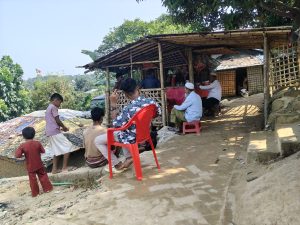 Figure 1: Each generation of Rohingya wants something different from justice. Photo Credit: Mohammed Imran @Pan Thar
Going Home Without Rights Is Not Justice
Mohammed Younus, a high school teacher from Myanmar, says that losing a home means more than losing a place. It means losing family, community, legal status, and safety. One survivor shared what justice means to her:
“Justice means the rights taken away from me – that I lost my family members, my husband was taken, killed – and we were discriminated against as a whole.”
— A Rohingya Woman
Another survivor said he would not return unless he had the same rights as other citizens. This is not an unreasonable demand. It is a basic expectation that people should be able to return to their homeland without facing the same discrimination, insecurity, and restrictions that forced them to leave. One particularly powerful reflection captures this understanding:
“Going home doesn’t mean just crossing back over the Naf River. It means going home with full human rights in our motherland, without fear, with our citizenship.”
— A Rohingya Survivor
This is a basic demand. Sending people back without citizenship and safety would only return them to the conditions that forced them out. Repatriation is not a lasting solution just because people cross a border.
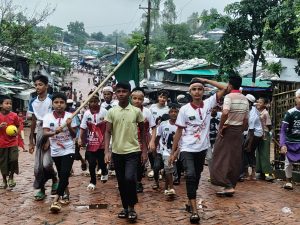 Figure 2: Rohingya children are expressing their hope for a sustainable repatriation during 25th August Rohingya Genocide Remembrance Day. Photo Credit: Mohammed Imran @Pan Thar
Parents Dream of Education
Parents in the camps worry about more than food and shelter. They worry about what their children will lose if nothing changes. Omor Faroque, a community teacher, says education is the clearest sign of their hope. Many families make sacrifices so their children can keep learning.
Dil Nowas Begum hopes her daughters will become lawyers who can “advocate and work for our people and our motherland.” Another mother said:
“I want to educate my children so that they can understand what is good and what is bad for them. So, they can raise their voices against the injustice.”
— A Rohingya Woman
These mothers want their children to have the knowledge to defend their own rights. Imagine Rohingya children growing up to be teachers, doctors, lawyers, and leaders who speak for themselves.
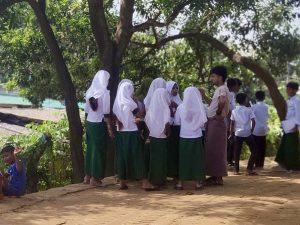 Figure 3: Rohingya children are going to sit for an exam under a community-based education system. Photo Credit: Mohammed Imran @Pan Thar
A Young Generation That Will Not Give Up
For young Rohingya, the ICJ case brings hope and frustration together. Mohammed Rayyan Imran, a social activist, says the case has pushed young people to document abuses, raise awareness online, and take part in advocacy. The survivors’ testimony in court also helps preserve the truth for the future.
But many young people have spent most of their childhood in camps, with limited schooling and an uncertain future. Young activist Nur Kamal said:
“Nine years growing up in a tent robbed me of my freedom and childhood. But my generation is determined to fight for a better future.”
— Nur Kamal
Why Does Justice Take So Long?
For families who are waiting, every year feels long. It is natural to feel frustrated. But a genocide case needs careful study of evidence and law, and the judges must be independent and fair. A rushed judgment would carry less weight.
‘Justice delayed is justice denied’ is a familiar saying. As a Rohingya youth, I believe a long process does not automatically mean justice will be denied. We should keep demanding accountability, but we should also respect the Court’s independence. Patience must not become passivity.
A Judgment Is Not the End
The ruling will be a milestone, but it will not solve the Rohingya crisis. The case is about Myanmar’s responsibility as a state. It is not a trial of individual military officers.
For displaced families, justice has to show up in daily life: schooling, healthcare, work, freedom of movement, legal recognition, and protection from discrimination. It also means a safe, voluntary return with full citizenship. And the Rohingya must have a real say in decisions about our own future.