– Cox’s Bazar, Bangladesh
CSD – Every year, when the winds drop and the Bay of Bengal turns calm, boats begin slipping out from the coast near Cox’s Bazar. The sailing season runs roughly from October to April, and it has started again. So has the worry that more people will hand their savings, and their lives, to brokers and climb onto crowded fishing boats bound for Malaysia.
Most of the people on these boats are Rohingya refugees from the camps, and many are Bangladeshis too. They leave for different reasons, but too often they end up in the same place: a dangerous sea, and at the far end, a country that is closing its doors. This article looks at the 2025–26 season and the start of the new one: how many people are leaving, the routes they take, what the journey costs, why people go, life for Rohingya in Malaysia, and what can be done.
Leaving to Survive, Dying on the Way
The numbers began rising early this year. Save the Children’s analysis of UNHCR data shows that 2,907 people left Bangladesh and Myanmar by boat between January and March 2026, compared with 1,571 in the same three months of 2025. That is about 85 per cent more. According to UNHCR, women and children make up more than half of the people who travel this way.
This comes after the deadliest year on record. In 2025, more than 6,500 Rohingya set out by sea and over 890 of them died or went missing, says the International Organization for Migration (IOM). On the Andaman Sea and the Bay of Bengal alone, deaths and disappearances rose from 598 in 2024 to 860 in 2025. Put simply, roughly one in every seven people who boarded a boat did not arrive.
The worst news of the 2025–26 season came in April. A trawler carrying Rohingya refugees and Bangladeshis left Teknaf for Malaysia and sank in the Andaman Sea on 9 April, reportedly because of strong winds, rough seas and too many people on board. About 250 people, including children, were feared dead or missing. One survivor, Rafiqul Islam, told AFP that traffickers had promised him a job in Malaysia, and that the boat was at sea for four days before it capsized.
Then, in the monsoon months, when the sea is at its most dangerous, two more boats left Rakhine State. One, with about 250 people, lost contact soon after leaving. The other, with about 280, is believed to have sunk off the Ayeyarwady coast on 8 July. UN agencies said the reports were not confirmed, but feared more than 500 people had died.
Bangladesh’s forces have stopped many boats before they got far. On the night of 3 January, the Navy detained 273 people, including 10 suspected traffickers, on a boat about 30 miles from St Martin’s Island. The Coast Guard also rescued people from boats in January, February and, even in the monsoon, June. In early October, as the new season opened, a court in Cox’s Bazar sent 13 people to jail after the Navy rescued 63 people from a Malaysia-bound boat. Fourteen of them were Rohingya; the rest were Bangladeshis.
A friend of mine told me that I can earn money if I migrate to another country. Having no livelihood opportunity in the refugee camps, I left for Malaysia through a broker who promised me of a safe journey. On the boat, I was left with no proper food for five days until it was filled with people. Our boat was intercepted by a Bangladeshi Navy, and we were sent back to the camps. — A young Rohingya boy in a refugee camp in Bangladesh, interviewed by CSD
Where the boats go
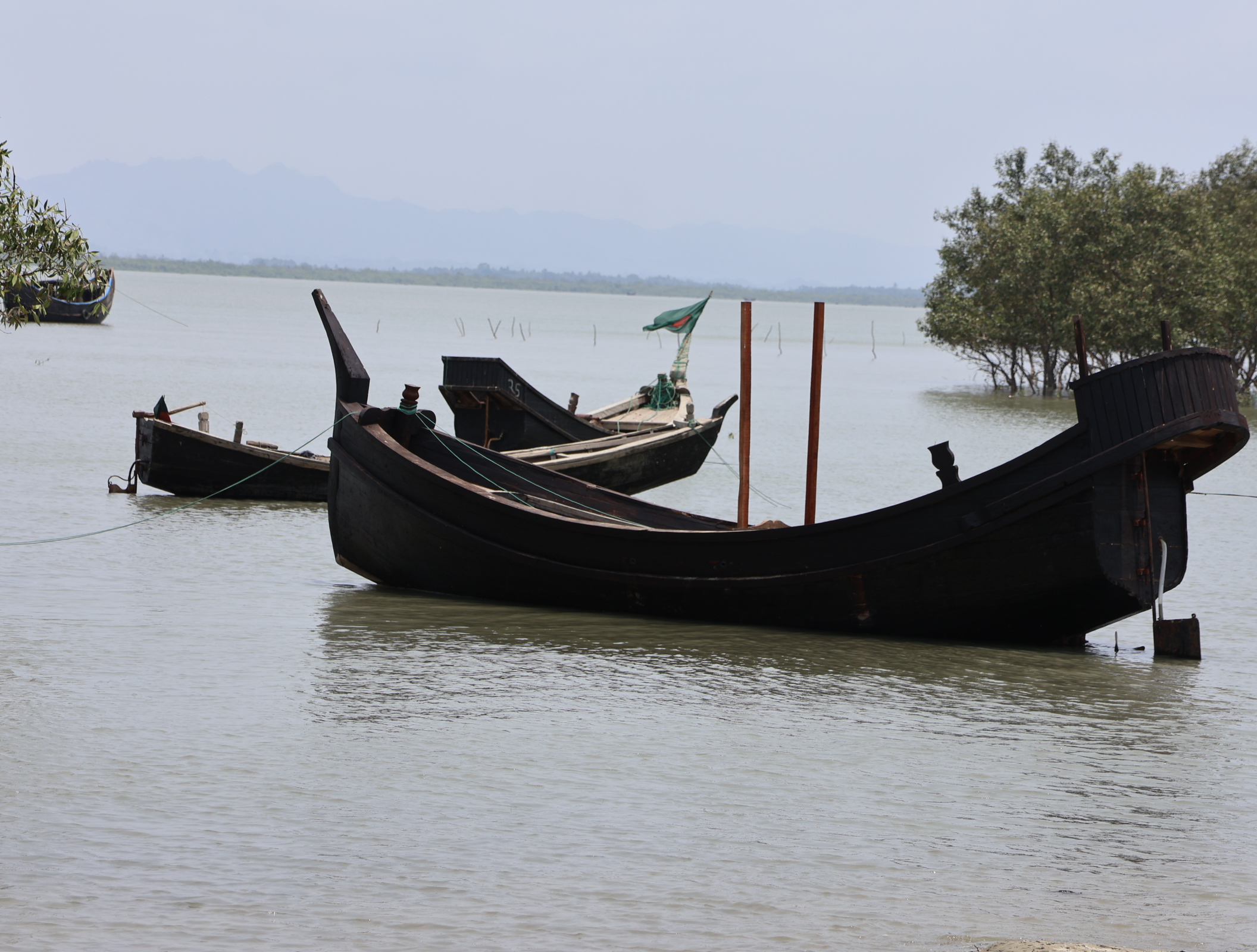
Most boats leave from the Teknaf coast and nearby beaches such as Kolatoli and Baharchhara, or from Rakhine State in Myanmar. The usual destination is Malaysia, a Muslim-majority country where the Rohingya community has grown to more than 200,000 people. Some boats head for Indonesia instead.
The sea is only part of the route. The Lowy Institute describes how Rohingya are now often taken by boat to the Myanmar–Thai border and then made to walk across Thailand, sometimes for days, or driven towards the Malaysian border. Boats also try hard not to be seen. In November 2025, a group of about 300 people was split into smaller boats as it neared Malaysia, and one broke apart near Langkawi. Thirty-six bodies were recovered and 14 people survived.
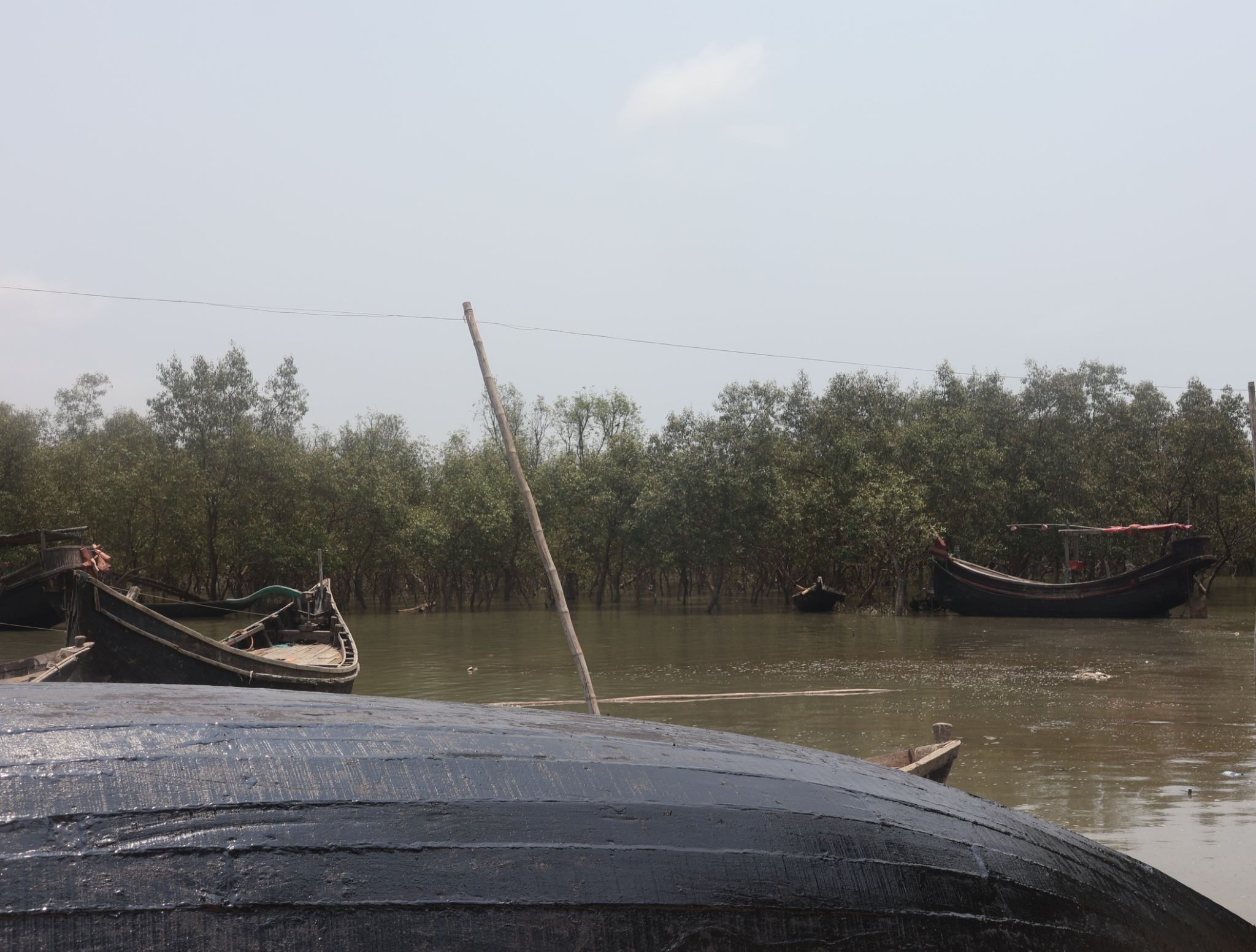
Figure 1: Fishing boats in a mangrove creek in Teknaf. Journeys often start from quiet landing points like this. Photo Credit: Rohim Ullah
What gets people on the boat is a promise. Brokers talk of jobs, safety, even a husband waiting abroad. This is how smuggling, which means paying someone to cross a border illegally, so often turns into trafficking, where people are tricked, forced or sold. UNHCR and IOM have warned that many journeys begin with false promises of higher wages and better opportunities.
What the journey costs
For a family in the camps, the price is huge. After the November 2025 wreck, police in Kedah said that each person had reportedly paid about RM13,000 to the syndicate. Families borrow, sell what they have, and hope. The first price is often not the last: smugglers demand more money on the way and beat people whose families cannot pay, and rape and the sale of girls have been reported.
The deepest cost is not money. Many families still do not know what happened to a son, a daughter or a husband who left on a boat. There is no body to bury and no news to hold on to. Behind every missing person is a family that keeps counting the days.
Why people leave
Food is one pressure. On 1 April, the World Food Programme (WFP) started a new three-tier ration system. About 17 per cent of people in the camps now get as little as $7 a month, down from $12, and two-thirds of the population receive less than before. WFP says this is not a ration cut because the amounts still meet minimum food needs. Bangladesh’s refugee commissioner, and many families, see it very differently.
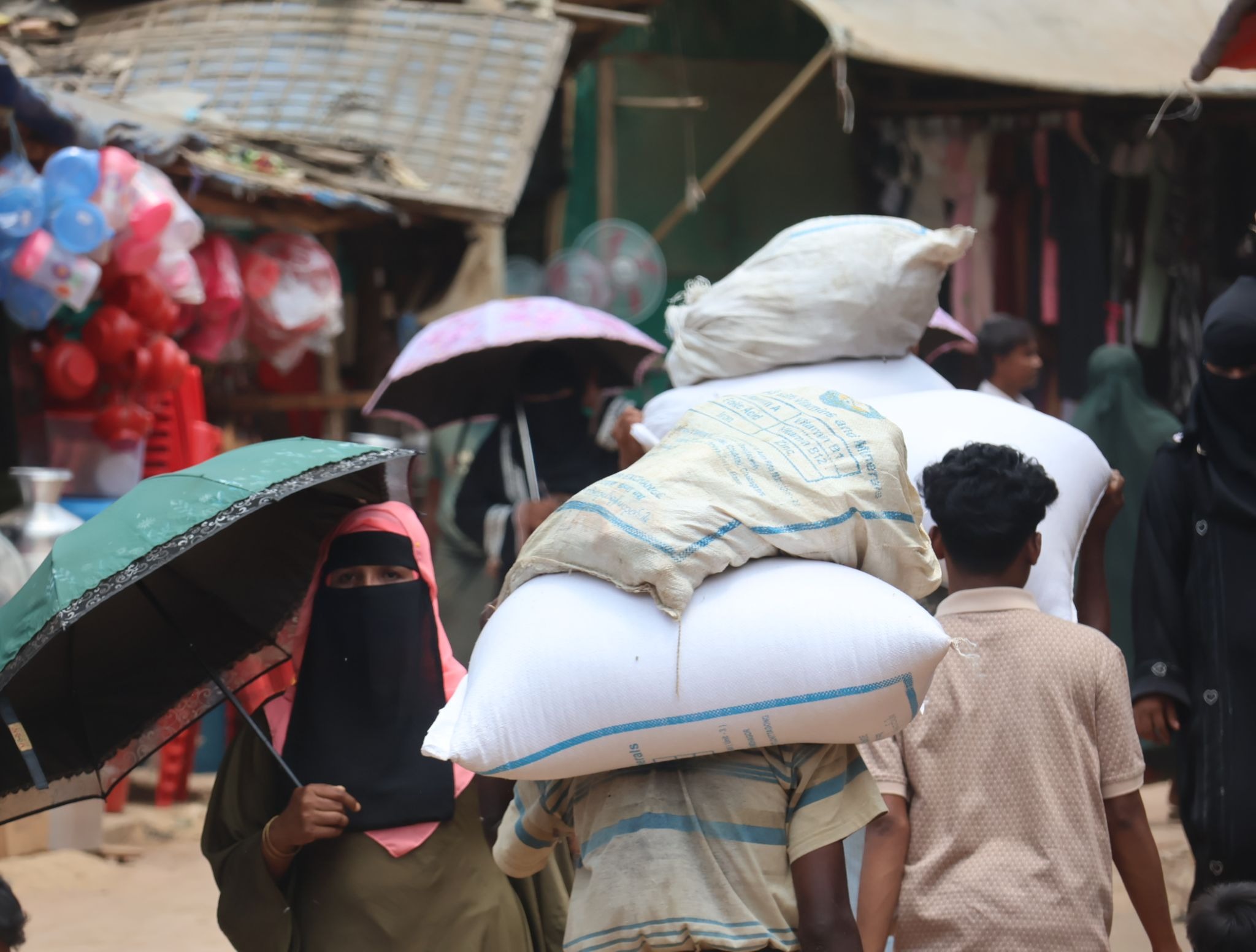
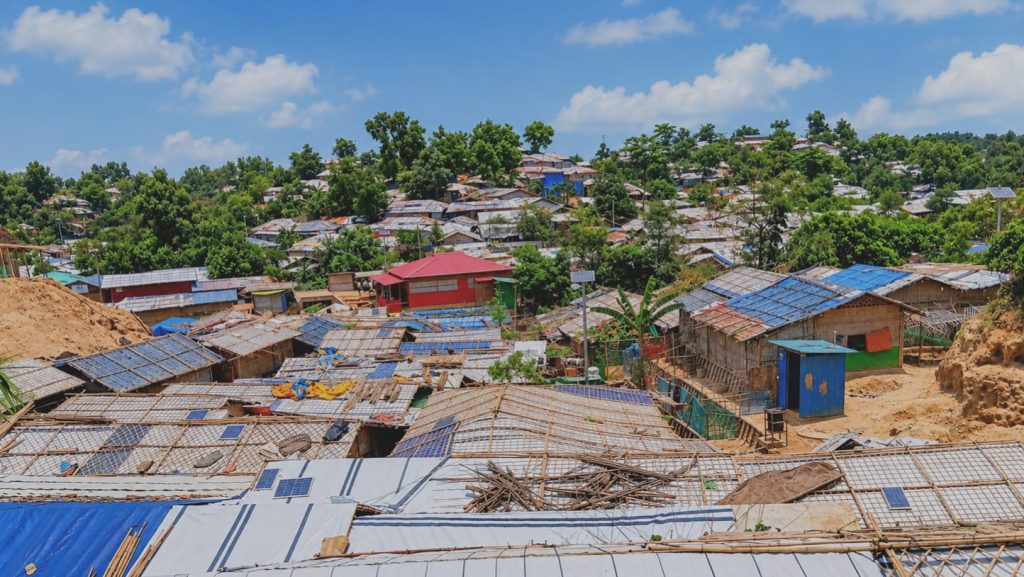
Figure 2: Life in the camps: food and money are running short. Photo Credit: Rohim Ullah
Money is short everywhere. The 2026 response plan for Rohingya and host communities asks for $710.5 million, its lowest level in a decade, and was only about half funded by September. Last year’s aid cuts also closed learning centres. Rohingya cannot work legally in Bangladesh, and one father told AP his children cannot safely leave the camp to earn money because of the risk of kidnapping, violence and trafficking.
Going home is not possible for now. The military that forced about 740,000 Rohingya out of Rakhine State in 2017 still holds power in Myanmar, and fighting continues there. UNHCR and IOM say the violence makes a safe return uncertain. Nikkei Asia has also reported on Rohingya taking to the sea as UN food aid cuts hit the camps. Brokers do not have to push hard. They simply offer a way out to people who feel they have none.
Waiting in fear: Rohingya in Malaysia
For years, Malaysia was seen as a safe place for Rohingya. Many families already have relatives there, and about 126,000 Rohingya are registered with UNHCR, the largest refugee group in the country. But Malaysia has not signed the UN Refugee Convention, and it treats people without papers as illegal migrants. Today, the welcome has worn thin.
Life without a card
A UNHCR card is the one piece of paper that gives some protection in Malaysia. CSD spoke with two Rohingya who reached Malaysia in 2025 and still have no card.
One is a mother whose baby boy was born in March 2026. Because she has no card, getting into a hospital was hard. Her husband earns very little, but with that money she was admitted for the birth. He does hold a UNHCR card, and he asked the hospital to help take her case to UNHCR in the hope of support. No help came. Then the baby became seriously ill, and to pay for his treatment the family borrowed around RM15,000 from relatives.
The other is a young boy who now lives in hiding. With no card, he cannot go to work, and he cannot safely go to a hospital in an emergency. Hate campaigns by some Malaysians and people from other communities, and raids that go on day and night, keep him inside the house. He told us:
I came here for a safe life, where I could earn some money and support my family in the refugee camps in Bangladesh. But now my vulnerable family in Cox’s Bazar may have to send money to me. I came here hoping for the kindness of the Malaysian people, who have always stood by us. The situation is so bad now that I can hardly breathe because of fear. — A young Rohingya boy in Malaysia, interviewed by CSD
Since 23 July, it has become even harder. Malaysia told UNHCR to temporarily stop registering new refugees, which means people arriving now cannot get a card at all.
Raids, detention and deportation
Immigration raids have grown more frequent since June. Refugee advocate Heidy Quah told Al Jazeera there can be up to 50 raids a day, and Al Jazeera reports that more than 50,000 refugees have been detained this year. A Fortify Rights investigation published in March found more than 21,000 migrants and refugees held in immigration detention centres, including 8,884 people from Myanmar, of whom 5,102 were Rohingya, about one in four detainees. It also says UNHCR has had no regular access to detainees since August 2019. The two sets of figures come from different sources and are not directly comparable.
The government has also started its own registration system, the Refugee Registration Document (DPP). Its first phase began on 1 June and covers about 4,000 detained refugees, mostly Rohingya. Rights groups worry that UNHCR has no clear role in it and that people not yet registered could be arrested or sent back.
On 29 September, Malaysia sent back 1,476 Myanmar nationals by sea in what the Home Ministry calls the “voluntary” first phase of returns. Malaysia’s human rights commission, SUHAKAM, said 27 children were among them. UNHCR said the people were in detention when they agreed to return and that it had no access to them, which raises doubts about whether the choice was free and informed. Community leaders said few or no Rohingya were in this group, but refugee leaders say they now get more than 100 calls a day from frightened people asking for help. Prime Minister Anwar Ibrahim says Myanmar has agreed to take back 5,000 Rohingya, but Myanmar officials say their programme covers only verified Myanmar nationals held in detention.
On 7 October, Myanmar’s military leader, Min Aung Hlaing, arrived in Kuala Lumpur for a two-day visit, his first to Malaysia since the 2021 coup. Human Rights Watch and Fortify Rights had urged Malaysia to press him to end abuses, or to cancel the visit. For Rohingya families, the contrast is painful: the head of the army they fled was welcomed, while their relatives sit in detention or hide in fear.
Hate online, fear at home
Human Rights Watch says Rohingya in Malaysia live under the constant threat of arrest, in a climate of fear made worse by a surge of online hate. On 27 July, more than 100 Rohingya, many of them women and children who said they had been evicted from their homes, gathered outside the UNHCR office in Kuala Lumpur and were taken away in police trucks. Police later said nobody was arrested and that the group was checked, documented and released. Amnesty International Malaysia said the country “cannot build a credible refugee protection system while simultaneously treating refugees as people to be rounded up, detained, and removed”.
Some Malaysians say they worry about population growth, people working without permits, and differences in culture and way of life. At the same time, Malaysia’s police chief has asked the public to stop spreading unfounded claims. He said that only 89 Rohingya have been linked to criminal cases since 2024, which is about 0.02 per cent of all offences.
Families in the camps feel all of this from far away. Every raid in Kuala Lumpur becomes a worried phone call in Cox’s Bazar. The people they sent to find safety are now the ones who may need money from home.
What needs to be done
There is no single fix. But people in the camps, authorities in Bangladesh and Malaysia, and international partners can all take steps, and some would start to help quickly.
Governments and camp authorities:
- The Bangladesh authorities should identify and punish brokers who recruit people in and around the camps, and make reporting safe for camp residents. Smuggling and trafficking are crimes under the Human Trafficking Prevention and Suppression Act 2012.
- Those rescued or intercepted should get care and a safe way back to their families, not blame.
- The Malaysian government should restart registration for Rohingya who are not yet registered, stop deportations, release people held in detention for years, and allow work and basic rights.
NGOs, INGOs and CBOs:
- Expand awareness sessions in the camps, with community leaders and religious leaders, so families know what is happening in Malaysia and can spot a broker’s tricks.
- Support learning centres, skills training and safe income for young people and women, and offer counselling and tracing help to families of the missing.
UN agencies & Human rights organisations:
- UNHCR, WFP and IOM should keep asking the international community to sustain funding for life-saving help, and should check that ration levels do not push families towards the sea.
- UNHCR should keep seeking access to detention centres and a role in registration. UN agencies should insist that no one is returned to Myanmar unless it is voluntary, safe and dignified.
- Record detention, deportations and online hate against Rohingya, monitor what happens to people sent back to Myanmar, and press for regional action.